Engineering Innovation
in Autonomous Systems
Passionate about pushing the boundaries of autonomous vehicle technology, with expertise in UAVs and marine systems. Seeking challenging opportunities where leadership meets cutting-edge innovation.
About Me
Autonomous UAVs
Deep interest in unmanned aerial vehicle systems, focusing on autonomous navigation, control systems, and real-world applications.
Marine Systems
Specialized knowledge in semi-submersible platforms and autonomous marine vehicles with cutting-edge sensor integration.
Leadership
Proven track record in leading technical teams, driving innovation, and delivering results in challenging environments.
Featured Projects
Quality Engineering Documentation
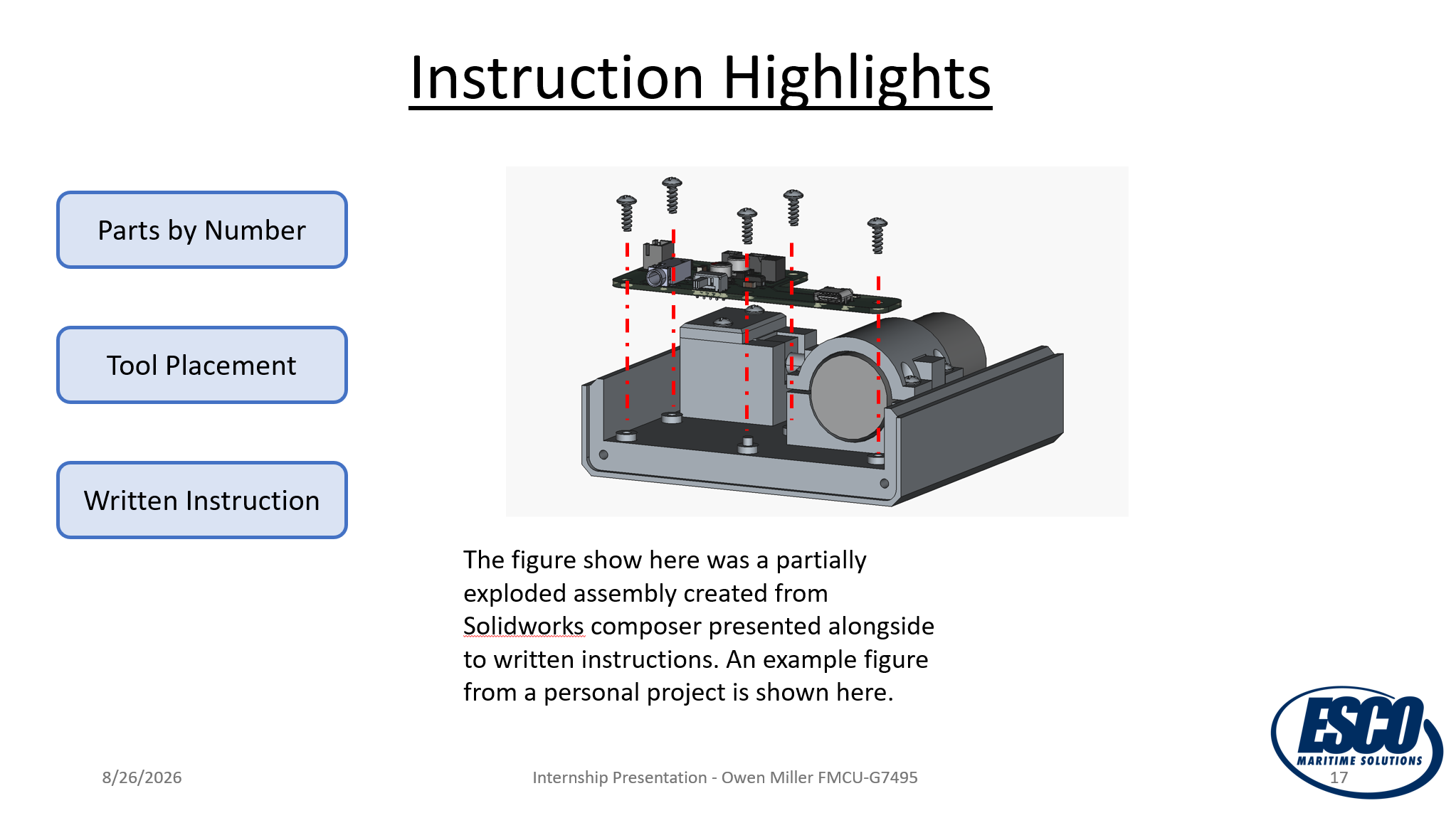
I implemented new documentation which reduced production times by 10% (3 hours per build). I learned how to use SolidWorks Composer and then used that to produce diagrams for the documentation. Then I trained and mentored staff in best practices for quality assurance. Overall I investigated 17 manufacturing process variation issues using root-cause analysis which led me to coordinate with the product engineering team to resolve 3 design-related issues.
Lunar Rover
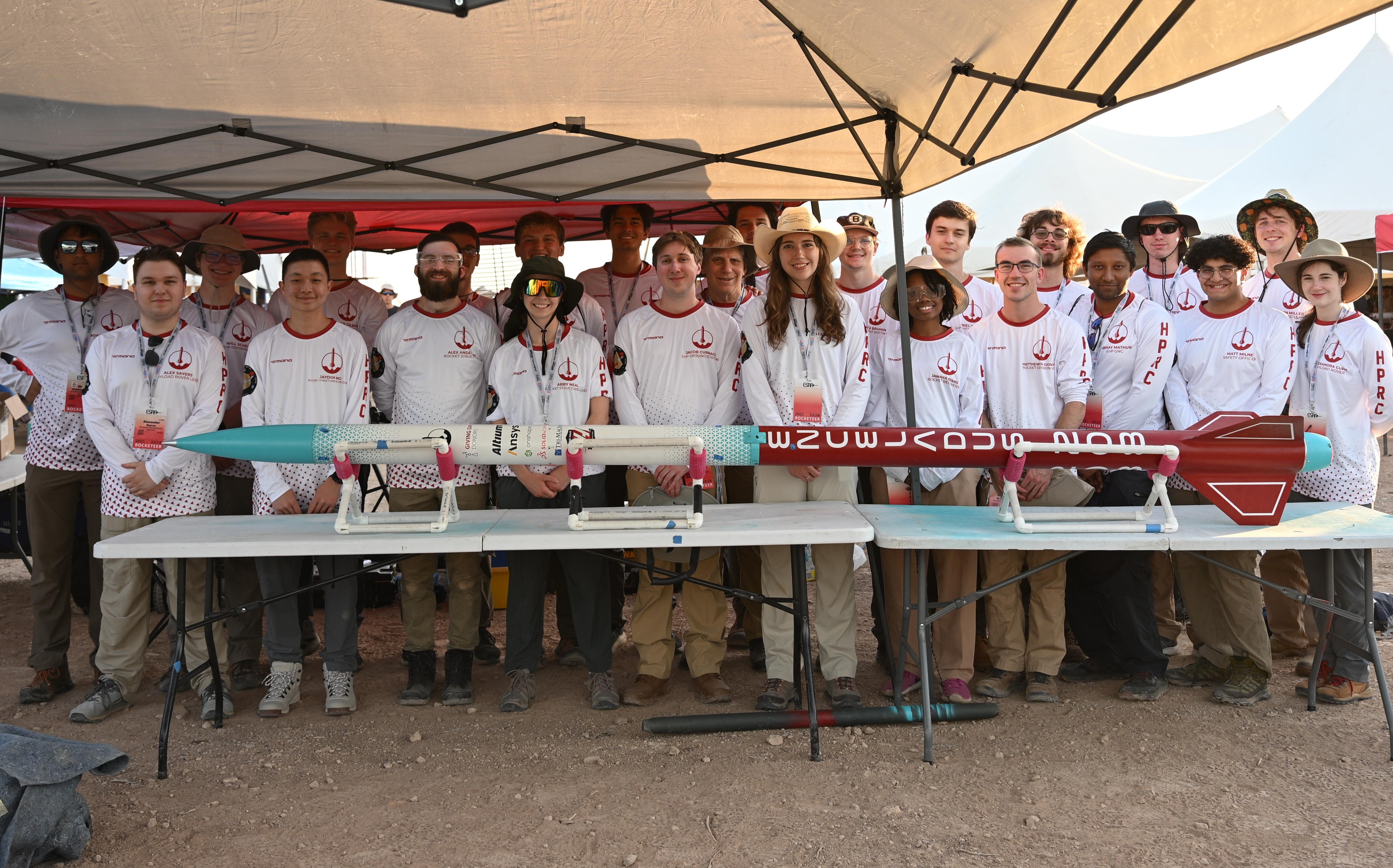
As division lead, I led a team of 40 engineering students to build an autonomous rover conformant to Space Dynamics Labratory (SDL) and NASA CubeSat specifications. The rover and payload lander vehicle flew in the WPI High Power Rocketry Club's supersonic 5" rocket up to 19,000 ft at the 2026 ESRA International Rocket Engineering Competition alongside 142 other teams from 13 countries. As a team mentor, I will assist new members and senior executives alike in the development of a rover capable of true 3D mapping and intelligent obstacle avoidance.
I oversaw Preliminary and Critical Design Reviews of all hardware and software. I weekly met with the executive board, the club officers, and payload sub-team leads to track progress and deadlines in tehcnical and interpersonal issues.
The payload deflated its parachute upon landing, self-righted the rover, released a latch mechanism, and then deployed the rover vehicle. Onboard footage from an OpenMV RT1062 captured the launch and landing sequence. A radio module capable of transmitting live video and receiving override remote control commands over 433MHz was tested up to 1 mile in a city, but not used at the launch. Data was collected on a separate test vehicle from a ToF (Time of Flight) camera, 2D scanning LiDAR, and a Nicla Vision module for analysis and training in the coming year (2026-2027).
All hardware was student reasearched and developed, either as 3D prints, CNC'ed aluminum, or externally machined SLM titanium. Motors designed for use in combat robots (similar to BattleBots) were selected for the drivetrain for their high torque and environmental toughness. For structural components, 3D printed parts used PETG-CF to withstand the 20.8G's experienced during launch, and crucially, heat resistance to internal rocket temperatures up to a recorded 157°F
Cable Tester
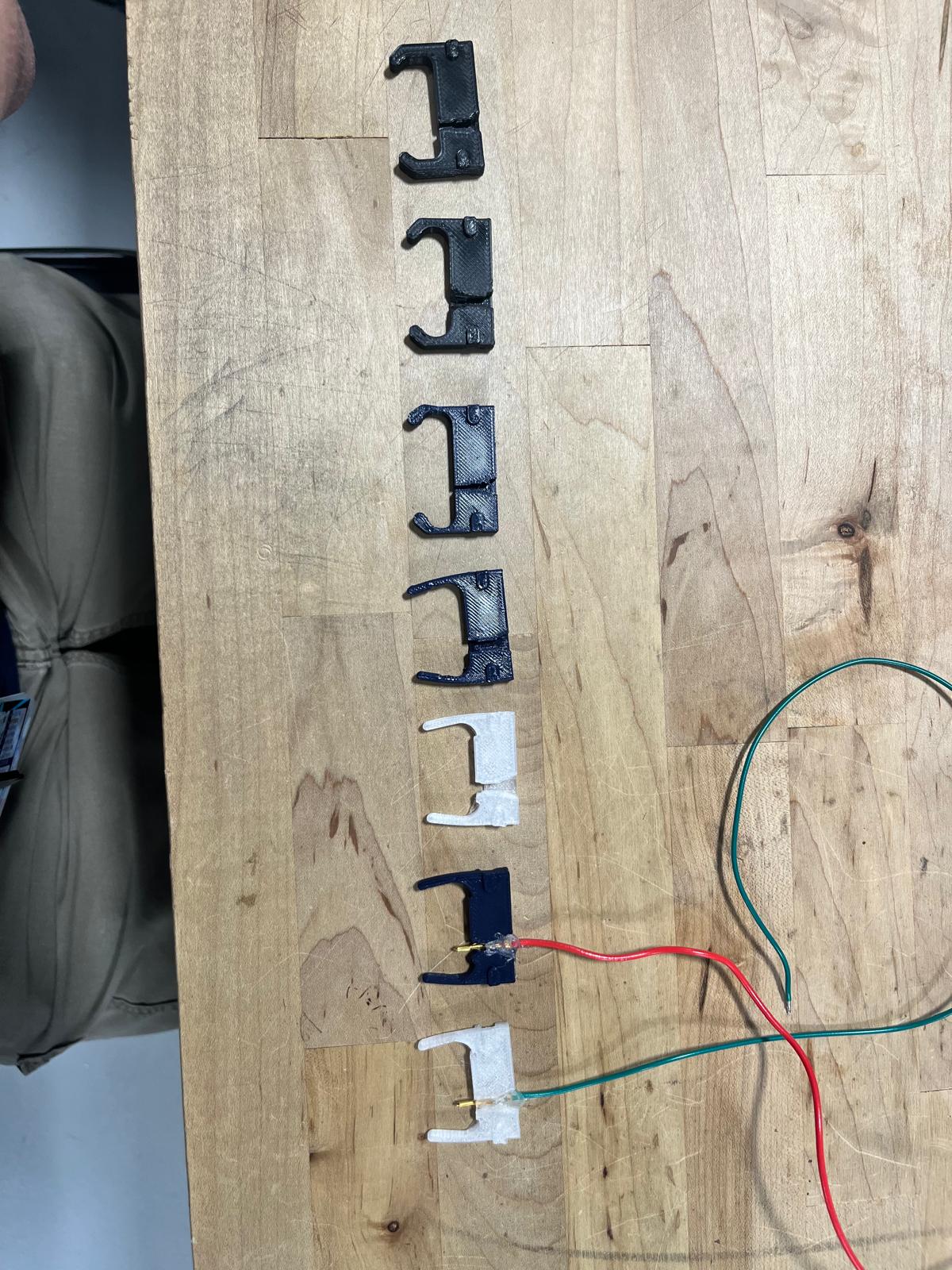
At TTM Technologies, I built a cable tester to catch wiring errors before control boards could be plugged in correctly. I was tasked with improving the accuracy, measured accuracy, or assembly time of multi-axis punch alignment machines. To start, I oberved current testing and manufacturing processes. I identified that many electronics can be destroyed when machines are first turned on due to wiring errors that would be too time consuming to check manually with a multimeter. Thus, I developed a portable tester that could test for shorts or missing connections across up to 66 DIN rail screw terminals at once. The control board involved a multiplexed array of ADC chips and pullup resistors that used both I2C and SPI with an Arduino Uno driving an LCD screen with simple button controls.
Vacuum Tweezers
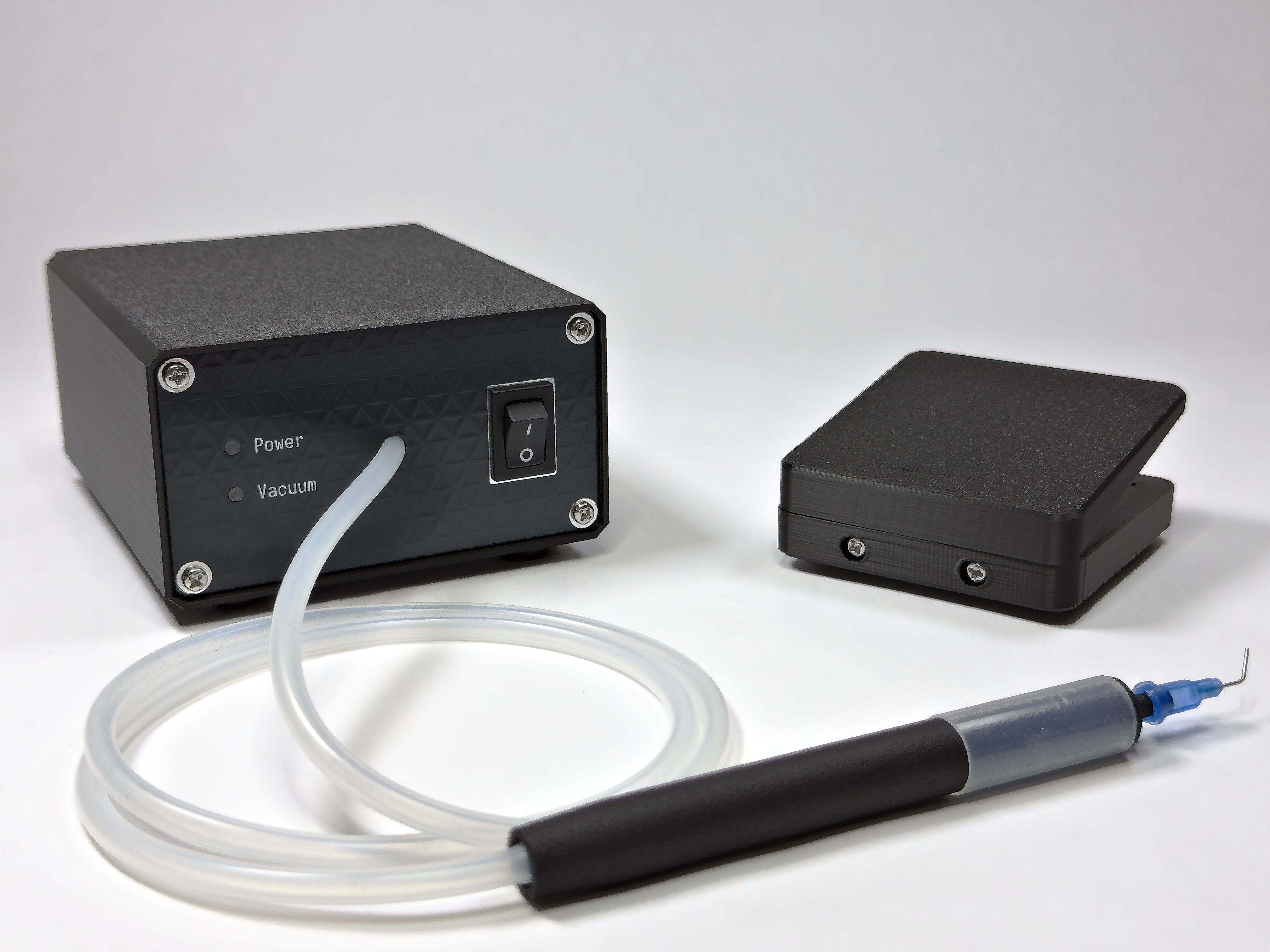
Cofounded a direct to consumer robotics startup (ARENA Robotics LLC) to develop a vacuum tweezer system for use in electronics assembly. The system is designed to be a low-cost, high-precision alternative to traditional pick-and-place machines, with the goal of making electronics assembly more accessible to hobbyists and small businesses.
Led the design and development of the vacuum tweezer system, including the mechanical design, control system, and user manual. Conducted extensive testing and iteration to ensure the system met performance and reliability requirements. Sourced 25 parts across 7 suppliers, including custom machined components, to build the first functional prototype. Implemented safety features to prevent damage to delicate components during operation.
Generated a 30 step instruction guide with CAD renderings and photographs to assist users in assembling and operating the vacuum tweezer system. The guide includes detailed instructions for each step, as well as troubleshooting tips and safety precautions.
Mapping Energy Poverty
For fifteen weeks in early 2026, I worked with a team of four other WPI students to map energy poverty in rural Spain. Our main deliverable was a website with an interactive map used to present our findings. The project was sponsored by the WPI Global Projects Program and was conducted in collaboration with the Escuela Superior de Ingeniería at the Universidad de Cadíz. I worked with local community leaders, government officials, department scholars, and residents to collect data on energy usage, access to electricity, and the impact of energy poverty on daily life. The project involved conducting surveys and street interviews with residents in rural communities, as well as analyzing data from government reports and academic studies.
The project resulted in a comprehensive report that identified key areas of energy poverty in rural Spain and provided recommendations for improving access to electricity and reducing energy costs. The report was presented to local government officials and community leaders. The project also resulted in a website with an interactive map that allows users to explore the data and findings from the project. The website was designed to be user-friendly and accessible to a wide audience, including policymakers, researchers, and the general public.
As the technical lead for the website, I expanded my knowledge of web development and data visualization. I learned how to use leaflet, agentic code development, and interdisciplinary collaboration methods.
Combat Datalogger
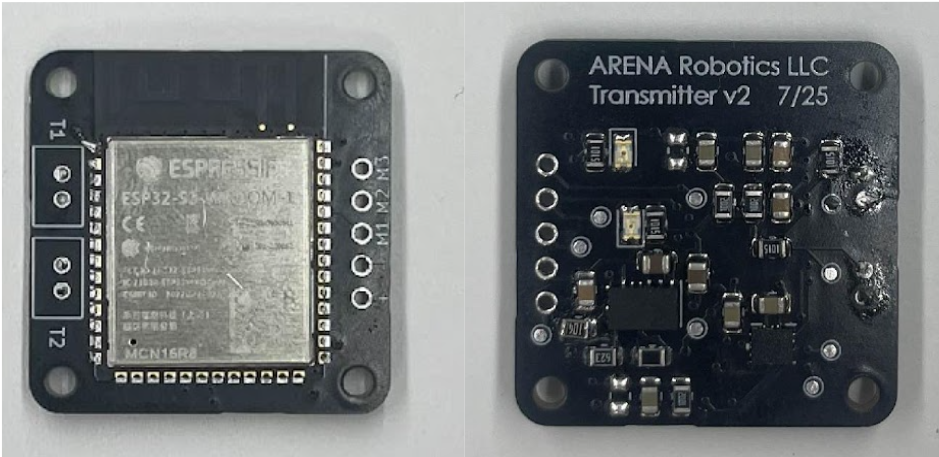
Worked with the largest combat robotic league in the U.S. over three physical prototypes to develop a live datalogging system for use in livestreams. The project started out of a shared desire among two of my peer engineers to spread STEM education by growing the combat robotics sport. The datalogger was developed under ARENA Robotics LLC before the company pivoted to the vacuum tweezers.
Was awarded a $1,500 stipend for completition of the UConn Propelus NSF I-Corps program. In those rewarding seven weeks, my team and I interviewed 21 potential customers. End results were a functional leading-edge transmitter capable of +-200G force sensing, -20°F to +200°F temperature sensor, and smoothed quaternion orientation tracking. Paired with a custom portable reciever with an LED display, the alpha prototype was functional, but ultimately found not to be economically viable without external support.
Bridged tech development and user experience to deploy live combat robotics monitoring systems. Partnered with a team of engineers to build custom sensor-integrated PCBs for the nation's top combat robotics organization. Successfully navigated three design iterations driven by intensive customer discovery, learning firsthand how to deploy resilient technology under extreme, unpredictable field conditions
Firefly Sentry
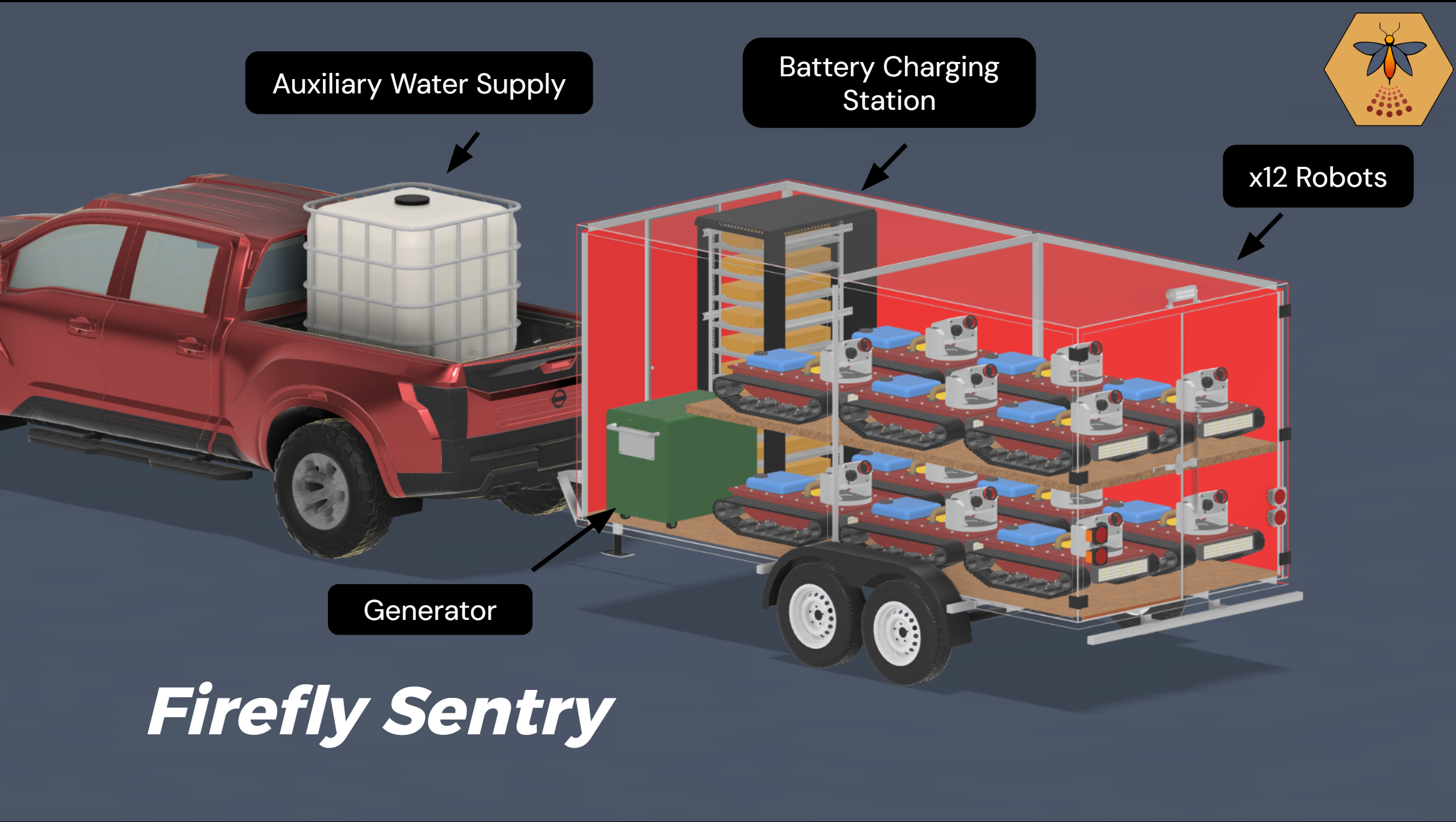
Long running research project to apply robotics to wildfire detection and supression. Starting as an independent study class in high school, continuing through the 2023 WPI Ignite Innovation pitch challenge where the project was awarded $1,000 in seed funding.
The project went through four aircraft prototypes where I learned about CNC machining, 3D printing, and composite layup. The final prototype in 2023 was flight-capable, but determined to be too aerodynamically ineffecient to carry the necessary sensors and fire suppression equipment. Managing a two year project as a high school student with a budget of $400 taught me how to prioritize tasks, keep myself inspired and on track, and break down objectives into minimum possible requirements.
At WPI, my peer, Logan Trexler, and I worked with Curtis Carlson (retired CEO of Stanford Research Institute International), canadian drone company Stinton Aerial Services (regularly works with canadian wildfire management), Doctors James Urban and Albert Simeoni of the WPI Fire Protection Engineering department, and Dr. Carlo Pinciroli of the WPI Robotics Engineering department. Logan and I conducted a literature review of wildfire detection and suppression methods, and developed a new approach to wildland urban interface (WUI) fire detection and suppression using a redundant swarm network of tethered drones and ROVs. Presented on the need, benefit, advantages, and comeptitors to the approach. Within the nine week Ignite Innovation program, we examined a case study of the 2016 Fort McMurray wildfire in Alberta, Canada where 4,000 homes were rendered uninhabitable. We connected with the US wildfire fighting community, in talks with retired head of Cal Fire and local Massachusettss wildfire fighter Monica Nouveau.
Although wildfire supression costs totaled $3.5 billion in 2022, the project was put on hold due to its complex logistics and high initial costs. The project is currently in a dormant state, but I am still extremely interested in pursuing it in the future. To me, the project represents applying robotics to one of the most demanding envrionements on earth for the benefit of society.
FRC Team
As the founder of FRC team 9216, I formed and led a team of 20 high school students to design, build, and program a robot for the FIRST Robotics Competition (FRC). The team competed in the 2023 Waterbury Regional Competition, and the Hartford District Competition, where we won the Rookie of the Year award. I mentored students in mechanical design, electrical systems, and programming, and helped them develop skills in teamwork, problem-solving, and project management.
As one of my most rewarding roles, I made strong friendships with great engineers. I loved the level of owenship each team member was able to hold over the project. Since we had little advisor oversight or assistance from other teams, we found it incredibly exciting that every problem we were solving was novel to us.
In addition to competing in FRC, we built robotic displays for a local church. The displays were used to demonstrate the capabilities of robotics and inspire young students to pursue STEM education.
My favorite aspect of working on the FRC team was how many hats I got to wear. From having zoom calls with the superintendent of the district to holding team elections to reflashing the main controller at 3am, I covered tasks in every discipline. Experiencing this variety firsthand inspired me to pursue robotics, where I could capitalize on my love for the integration of diverse engineering components

More Projects
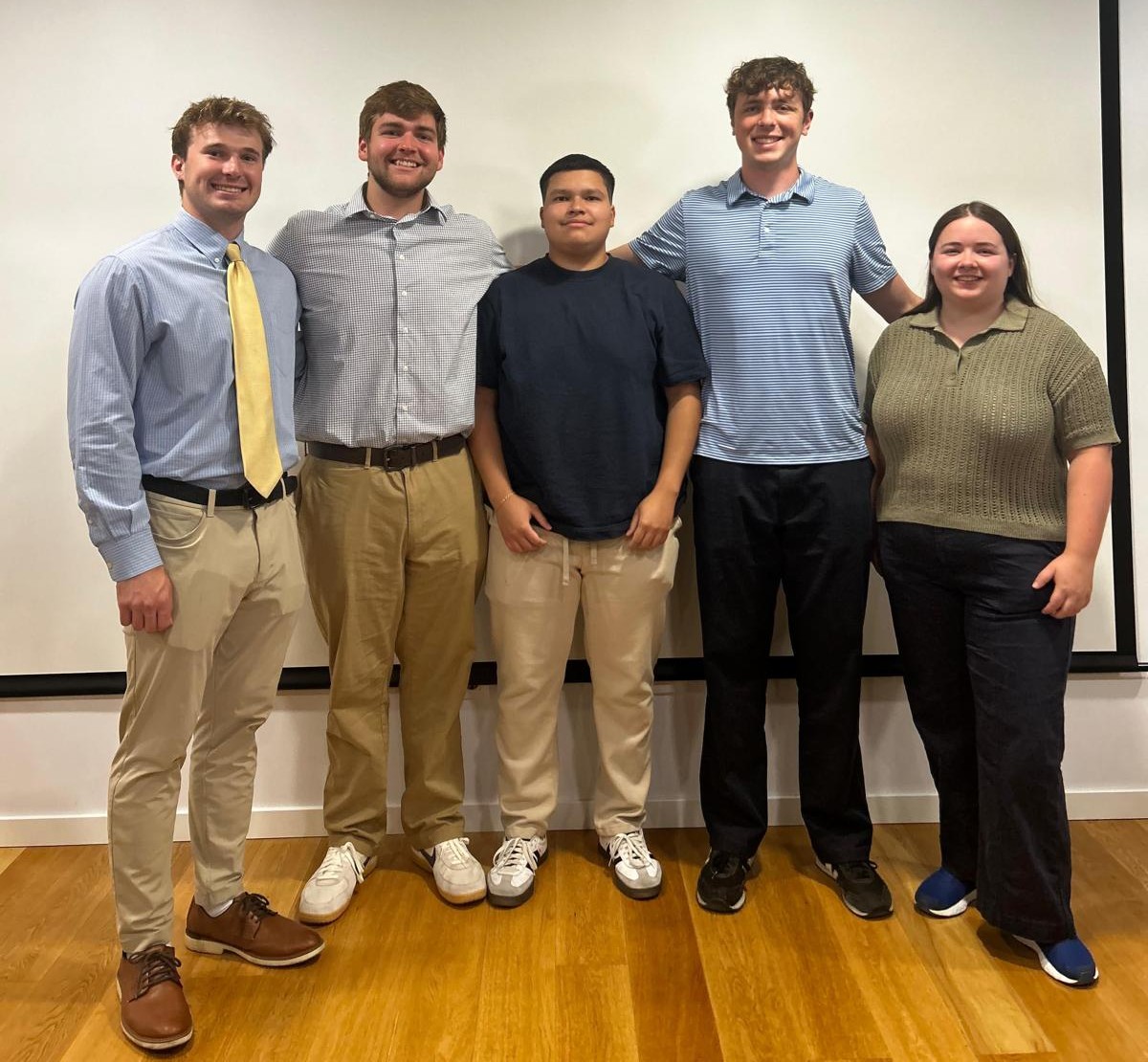
For more visuals and smaller projects, please visit the collage page.
Relevant Coursework
Unified Robotics IV: Navigation
Navigation, position estimation and communications. Concepts of dead reckoning, landmark updates, inertial sensors, and radio location will be explored. Control systems as applied to navigation will be presented. Communication, remote control and remote sensing for mobile robots and tele-robotic systems
Unified Robotics III: Manipulation
Coordinated motion of multiple actuators to execute complex manipulation tasks in the physical space. Trajectory planning, robot forces and dynamics, computer vision. Construction and programming of a vision-guided, multi degree of freedom robotic manipulator
Unified Robotics II: Sensing and Perception
Signal transduction, interface circuitry, and physical integration. Performance improvements through signal conditioning, digital filtering, calibration, parameter selection, and sensor fusion.
Software Engineering
Built a demo website for Mass General Bringham Hospital. Techniques for building medium to large-scale software systems. JIRA, two-week sprints, daily standups, PERN stack
Social Entrepreneurship
Case studies and discussions of public benefit corporations (B-Corps). Business and entrepreneurial tools that can be applied to the design of sustainable social business models. Topics include social opportunity recognition and evaluation, business models in the social sector, social impact assessment, the double-bottom line, scalability of solutions, organizational forms and structures, and social venture financing
Swarm Intelligence
Mathematical, computational, and biological self-organization and feedback systems. Common swarm algorithms for task allocation, collective motion, and collective decisionmaking. Optimization algorithms inspired by swarm intelligence.
Hobbies & Interests
Outside The Lab
I enjoy exploring the outdoors and spending time with people over hikes, beach trips, ski trips, and weekends camping. Below is a small gallery of recent photos with friends and family.


Music Tastes
I love classic rock, grunge, and house music, learning about each in middle school, high school, and college repsectively (lol). Avant garde music also attracts me like Jimi Hendrix, The Velvet Underground, and hyperpop. I love concerts so shoot me a text if you've got something on the horizon.
Favorite artists: Red Hot Chili Peppers, Billy Joel, Fred again.., The 502's
Ready for the Next Challenge
I'm actively seeking opportunities where I can contribute to innovative autonomous vehicle projects and take on leadership roles in challenging technical environments.